Are Jehovah's Witnesses part of a cult?

In recent years, especially since the advent of the Internet, the Watchtower Society has been increasingly cast as a secretive and dangerous cult. Various outreach groups have as their goal rescuing Jehovah's Witnesses from the clutches of the Watchtower. Some of those who accuse Jehovah's Witnesses of being members of a cult do so for the reason that Jehovah's Witnesses do not believe in the Trinity. But that is simply ridiculous. Jehovah's Witnesses do not believe in the Trinity because it's not a biblical teaching.

For example, the "Christian answers" website lists the Watchtower Society as the second most dangerous cult in America, supposedly because "they deny the essentials of Christian faith," which is to say Jehovah's Witnesses do not accept the babylonish claptrap that churches consider to be Christian essentials.

However, other more credible sources of the same accusation come from ex-Jehovah's Witnesses, who claim to have “escaped.” These do not necessarily believe the Trinity either.

But what is a cult? And are Jehovah's Witnesses similar to the destructive cults such as Scientology or the infamous David Koresh or the Jonestown cult? To establish what is a cult I have referenced the criteria established, not by Trinitarians or ex-Jehovah's Witnesses, but by psychologists. An organization known as the International Cultic Studies Association (ICSA) describes itself as “a global network of people concerned about psychological manipulation and abuse in cultic groups.” It has worked up a checklist that they describe as an analytic tool to help one discern the characteristics of an abusive cult. Over the course of the next two weeks I will consider one point each day. Here is the checklist

Jehovah's Witnesses - no part of the world

Going back to the days of the International Bible Students associated with Charles Taze Russell who were dubbed the “no hellers” because they rejected the myth of a fiery hell, up to the present, Jehovah’s Witnesses have been known more for what they do not believe or practice rather than for what they do believe.

In more recent decades Jehovah’s Witnesses have been known as the people who do not celebrate Christmas or birthdays; who do not believe that Jesus died on a cross; who do not believe that Jesus is God; who do not take blood transfusions; who do not salute the flag; who do not vote, nor fight for their country etc., etc.

Ironically, this perception of Jehovah's Witnesses confirms that they are no part of the world, as Jesus said his true followers must not be. Can it honestly be said of the multitudes of churchgoers that they are no part of the world? Truthfully, there is virtually no distinction between the average churchgoer who confesses a belief in Jesus and those who practice non-Christian religions or no religion at all. For example, has there ever been a war in which churchgoers have not participated? Perhaps there are a few individuals who happen to belong to a particular religion who refuse to take up arms and kill their fellowman, but the mainstream religions of Christendom have always blessed and supported the wars of the nations, all the while professing to adore the Prince of peace.

For those who have more than a passing interest in these matters and who wish to know why Jehovah's Witnesses do not celebrate this or that, this is a brief presentation of the reasons.

Originally the International Bible Students celebrated Christmas and Easter and birthdays and all the rest and a crucifix and crown used to appear upon the cover of the Watchtower Magazine. That was the situation up until 1925, or thereabouts.

It is well known that Jesus was not born on December 25th. His birth occurred in October. Furthermore, the original Christians did not celebrate Jesus’ birth. How then did the institution originate?

It is now common knowledge that the Romans had an annual revelry during the week of the winter solstice called the Feast of Saturnalia. (For more information on the pagan origins of Christmas click here) After the 1st century Christians had passed off the scene wicked men infiltrated Christianity, even as the apostles foretold. The apostate bishops then empowered the emperor of Rome to decide doctrinal matters for Christians. This opened the door for the eventual development of the great church systems of Catholicism and Orthodox. In order to appeal to the pagan masses the churches adopted many pagan concepts and holidays. To this day the masses of people who consider themselves to be Christian have far more in common with pagans than they do with original Christians. (Why do some people not celebrate Christmas?)

(Easter has a similar origin associated with the spring equinox. The word “Easter” is even drawn from the ancient fertility goddess known as Ishtar. Click here for article)

The apostle Paul once wrote to the Corinthians expressing his concern for their spiritual welfare, saying to them: “The things which the nations sacrifice they sacrifice to demons, and not to God; and I do not want you to become sharers with the demons. You cannot be drinking the cup of Jehovah and the cup of demons; you cannot be partaking of ‘the table of Jehovah’ and the table of demons. Or ‘are we inciting Jehovah to jealousy’? We are not stronger than he is, are we?”

Although people no longer offer animal sacrifices to God, as the Jews were once required to do, nonetheless, religious people engage in activities that could be considered sacrificial. For example, Christmas time is marked by great feasts and gift giving and of course, sharing in drinking. So, in a sense, that is the “table” associated with the holiday. But since the pagans did the very same things and Christians merely adopted the rituals of those who out-rightly worshipped the demons, is it not obvious that the practices and excesses of Christmas are also sacrifices made to the demons and not to God?

The real reason Jehovah’s Witnesses do not celebrate Christmas and Easter, and all the rest, is because they do not wish to become sharers with the demons.

Undoubtedly, the one thing Jehovah’s Witnesses are known for doing is knocking on doors. The original Christians were also known for their public witnessing. This is because Jesus commands his followers to preach and teach others about him and the kingdom of God. Jehovah’s Witnesses have preached the message of God’s kingdom to the farthest corners of the earth and have made the Bible and Bible literature available in hundreds of languages.

The activity of Jehovah’s Witnesses is truly noteworthy as it is no doubt preliminary to the fulfillment of Jesus’ words where he foretold that the good news of the kingdom would be preached in all the inhabited earth, as a witness to all the nations, and then the end will come.

The god of this world

Jehovah's Witnesses believe that Satan is the god of this world. (2 Corinthians 4:4) He became such when he misled Adam and Eve in the Garden of Eden, thereby effectively bringing the world under his evil influence. To grasp the extent of his power over mankind consider the words of Jesus when he said that the ruler of the world would be cast out. Who was Jesus referring to as the ruler of the world? Satan is the unseen ruler of the world. That is why Satan tempted Jesus by offering him all the kingdoms of the world that he rules over.

In the eighth chapter of the Gospel of John Jesus identified the Devil as a manslayer when he began and the father of the lie. Prior to his tempting the first man and woman into disobeying God Satan had been a righteous angel, but he coveted God’s worship and successfully schemed to seize it for himself. And because he selfishly brought about the death of Adam and even the deaths of all of their then-unborn offspring Jesus said that Satan was a murderer when he began. He is called the father of the lie because no one had ever lied before. Of course, there were no humans before Adam and Eve but there were certainly multitudes of righteous angels and none of them had ever lied. So, Satan invented the lie. His first lie was to call God a liar. He told our mother Eve that she would not die if she ate the forbidden fruit. He also slandered God by implying that mankind’s creator did not have their best interest at heart and that God could not even trust his own creation.

In Hebrew the word Devil means slanderer. With the whole world under his influence is it any wonder it is filled with violence and selfishness, lies and liars and evil of every sort?

But Satan’s original sin was not slander or murder. The sin that Satan succumbed to originally was pride. That is evident from the fact that Paul instructed overseers not to appoint  "a newly converted man, for fear that he might get puffed up with pride and fall into the judgment passed upon the Devil."

Being insanely jealous of Jehovah the Devil has always sought to turn people against God, while at the same time ever intent on insidiously inserting himself into the place of God in the hearts and minds of people.  Although Satan is only mentioned a few times in the Hebrew Scriptures, the so-called Old Testament, his influence is evidenced by Israel’s many lapses into idolatry. The idol gods of the nations, such as Chemosh, Moloch and the various Baals were merely fronts for the demons, as is revealed in the book of Deuteronomy the 32nd chapter: “They began inciting him to jealousy with strange gods; with detestable things they kept offending him. They went sacrificing to demons, not to God, gods whom they had not known, new ones who recently came in, with whom your forefathers were not acquainted.”

Because most people would not outwardly worship or follow Satan he has disguised himself, just as he did in the den by pretending to be a lowly serpent. Paul said that Satan could easily transform himself into an angel of light. In other words, just as Satan pretended to enlighten Eve the Devil is the biggest promoter of religion.

When Jesus was on the earth the Jews did not practice the worship of idols as they had centuries prior, however the Jewish religion itself had become an idol, because it was the focus of their worship and it blinded them to the truth that Jesus brought. That is why Jesus said to the Jews that they were from their father the Devil and they wished to do the desires of their father.

While Jesus was on the earth the Devil was intent on turning him away from Jehovah. In the wilderness he three times tempted Jesus to disobey God and three times Jesus rebuffed his temptations by quoting from the Scriptures, prefacing each reply with: “It is written.” Satan evidently even used the apostle Peter to try to influence Jesus not to go through with his self-sacrifice. When Peter urged Jesus to be kind to himself Jesus rebuked him by saying: ‘Get behind me Satan you think men’s thoughts not God’s.

Having failed to deter Jesus from his sacrificial course the Devil likely assumed that Jesus would not go through with it when the time came. But he did. One of the last things he spoke before he breathed his last breath was: “It has been accomplished.”

Just before his arrest Jesus warned Peter that Satan had demanded to have them too. After recovering from their initial stumbling and once they were filled with God’s holy spirit as Jesus had been, the apostles and other disciples became bold preachers and as a result Satan began viciously persecuting them. But that tactic did not meet with much success. When the Jews in Jerusalem persecuted the disciples it only caused Christians to flee the city to go preach elsewhere and as a result the good news was spread abroad.

By far Satan’s most successful tactic has been to infiltrate and corrupt Christians from within the congregations. Just as Satan insinuated himself into Jesus’ intimate group of 12 apostles through the person of Judas Iscariot, so too, the Devil would also successfully insert his agents into Christ’s congregation. When the apostle Paul wrote his second letter to the Corinthians he said of those whom he dubbed the "superfine apostles," that they were false Christians and deceitful workers who merely transformed themselves to appear as preachers of righteousness. Just as many Christians today disrespect the apostle Paul and consider him to have hijacked Christianity, the superfine apostles who presided over the Corinthians also looked down upon Paul and criticized him for not having a charismatic presence.

The apostle Paul warned the Ephesians that after he was to go away wicked man would infiltrate the congregation and mislead it and not treat the flock with kindness. Also, when the apostle John was quite aged he reminded faithful Christians that there had been many antichrists up until then but that an antichrist was yet coming and that it was the last hour. Was the apostle saying that it was the last hour before the arrival of Jesus? No, that is not what he was saying. The last hour had to do with it being the last hour before Satan would be allowed to completely take over what Christ had started, at least for a time. It was the last hour of the anointing, at least for a long time.

For a fact, shortly after the apostles died off, in the second and third centuries prominent men began to call into question who Jesus was. While the apostles knew that Jesus was the Son of God the infiltrators began to teach that Jesus was God himself. In 325 A.D. Roman Emperor Constantine called all the squabbling bishops to Nicaea in Asia Minor. After months of wrangling the Emperor of Rome declared Jesus to be God.  Thus, the Roman Emperor became the head of the Church of Christ and it was not along before numerous pagan doctrines and practices were fused into what passed for Christianity. Just as Satan had successfully misled Israel into worshiping demon gods he also succeeded in hijacking Christianity and infusing it with paganism and idolatry.

As incontrovertible evidence of the invisible manslayer’s control over it the churches of Christendom have always been the most ardent warmongers in the world. There has never been a war that was not blessed by clergymen. The Crusades, the Hundred Years War, the Thirty Years War and both World Wars were initiated and fought by millions of men who claimed to be Christians. But that is not possible. The apostle John stated that the children of God and the children of the Devil are distinguished by the fact that the children of the Devil kill each other.

But Satan the Devil will not be permitted to dominate Christianity perpetually, nor will he continue on as the god of this system. Jesus foretold that during the conclusion of the system of things the angels would be dispatched to uproot the sons of the Devil and prevent them from any more posing as Christians. Ultimately, Satan and all of his demons will be cast down from Jehovah’s heaven and confined to the earth, where they will be allowed to create havoc for a period designated in prophecy as three and a half years. Afterwards the rebel angels will be incarcerated for 1,000 years in order that mankind may be rehabilitated. At the end of the thousand-year reign of Christ Satan and the demons will be let loose for a short while and then destroyed, forever.


Are Jehovah's Witnesses Christians?

Matt Slick of The Christian Apologetics and Research Ministry (CARM) asks that very question (Is the Jehovah's Witnesses religion Christian?) and conveniently supplies the reader with the answer. Here is a quote taken from the CARM website:

"The answer to the question is, 'No. It is not Christian.' Like all non-Christian cults, the Jehovah's Witness organization distorts the essential doctrines of Christianity."

What "essential doctrines of Christianity" have Jehovah's Witnesses distorted? The next sentence enumerates three:

"It denies the deity of Christ, His physical resurrection, and salvation by grace. This alone makes it non-Christian."

So, according to CARM's criteria for determining what constitutes true Christianity, Jehovah's Witnesses' teachings are not Christian because they deny the deity of Christ; the nature of Christ's resurrection and "salvation by grace."

Briefly, let us examine each point.

Accusing Jehovah's Witnesses of denying the deity of Christ is akin to saying that Jehovah's Witnesses deny that Jesus was an alien being from Mars, which is, of course, true: Jehovah’s Witnesses deny that Jesus was a Martian. But Jehovah’s Witnesses do not deny that Jesus is the Son of God. The reason we are accused of denying the so-called "deity of Christ" is because Jesus never personally claimed to be God; so why should anyone else make that claim? It is simply not a Bible doctrine. It is a human doctrine.

Consider, too, that in the four gospel accounts Christ never once said that he was God—not so much as once! He certainly had many opportunities to do so, and no doubt he would have plainly stated that he was God if it were true. Jesus wanted people to know the truth about himself and his unique relationship with God. That is why he frequently declared that he was the Son of God—and a worshipper of Jehovah God.

Thinking persons would do well to consider why it is, then, that trinitarians have made Jesus' supposed godship one of the "essential doctrines of Christianity."

Of course, in the minds of those who are steeped in trinitarian dogma, the father and son and holy ghost are all the same person, only different persons. As nonsensical as that is, that is exactly how the Trinity is "explained." Here is how CARM explains it:

"The Father is not the same person as the Son who is not the same person as the Holy Spirit who is not the same person as the Father.  Each is divine, yet there are not three gods, but one God.  There are three persons individual subsistences, or persons."

Although ardent believers insist that each person of the Trinity is his own individual, still, there is only one god, not three gods in one. How can three separate persons be the same entity? No one knows. Like all Trinitarians, CARM also admits that the Trinity is an unknowable "mystery." (An incomprehensible mythology would be more accurate.)

The fact that Jesus repeatedly declared himself to be God's son means nothing to a person who has been mentally conditioned to believe that Jesus is God. The doctrine of the Trinity is like a house of mirrors. Nothing is as it seems. For instance, Trinity believers apparently believe that fathers beget themselves as sons and sons beget their own fathers, too. Except in the mythological world of the Trinity, the Father did not beget the son at all. The son has always existed just as his father has always existed. Apparently, though, for some strange reason the trinitarian god likes to pretend that there is some sort of father-son relationship between his multiple personalities. Just why the godhead explains his existence in terms of his being a father and son to himself is anyone's guess. No wonder believers declare their own mystification over the Trinity doctrine.

In reality the Bible says absolutely nothing about some mysterious triplets making up a single god. Certainly the apostles and first century Christians made no mention whatsoever of any sort of divine trio comprising a single godhead. The truth is that neither the word trinity nor the concept of three persons rolled into one God is found in the Bible. Yet, somehow, it is considered one of the essential doctrines by Trinitarians.

But if it is not biblical, just where did the mystery trinity concept come from anyway?

The worship of three divine personages predates Christianity by thousands of years. Evidently the Babylonians first conceived of a triad of gods. Later the Egyptians worshipped the triad of Osiris, Isis and Horus. During the time of Christ, the Romans idolized Jupiter, Juno, and Minerva. (See The Two Babylons—originally published in 1853)

How then did a pagan form of worship become the central teaching of Christendom? It is well known that after the apostles died off, Christianity became increasingly corrupt. As a result of an apostasy from Jehovah and under the influence of the demons, Jesus was gradually elevated from being the Son of God to God the son.

Finally, in 325, the Roman Emperor Constantine hosted a conference of bishops in Nicaea, France, where it was decided that Jesus was God. Amazingly, over the course of a few hundred years the Roman emperors went from feeding Christians to the lions to playing a major role in determining Christian doctrine! Although it would take several more centuries for the truth to be entirely snuffed out, eventually the trinity was institutionalized as the central teaching of Christendom.

What about the resurrection of Jesus?

According to CARM, Jehovah's Witnesses are not Christians because of denying that Christ was physically resurrected. That is a misleading statement. It might give uninformed persons the impression that Jehovah's Witnesses believe that Jesus was only symbolically resurrected, or something of that nature. Apparently, CARM intends to give the impression that Jehovah's Witnesses deny Christ's resurrection. Nothing could be farther from the truth. Jehovah's Witnesses most certainly believe and teach that Jesus was put to death and on the third day Jehovah resurrected him.

What does the Bible say about the resurrection of Jesus? It plainly says that Jesus was a spirit (as the Logos or Word) before he came to the earth, and upon his death and resurrection he returned to heaven—as a spirit. For a brief period of 40 days following his resurrection Jesus materialized as a human—often unrecognizable by his disciples—in order to convince them that he had indeed been raised from the dead. And it is true that Jesus visibly ascended into the clouds with pre-selected earthly observers as witnesses of his ascension. How else could his skeptical disciples be convinced that Jesus ascended back to heaven unless they saw it with their own eyes?

Unfortunately, the same people that insist that God is a mysterious amalgam of three persons rolled into one also believe that Jesus was raised up as a glorified man and not a spirit. This is in spite of the fact that in the 4th chapter of John Jesus very simply stated "God is a spirit." The suggestion that Jesus was resurrected in the flesh is all the more absurd in view of CARM's hackneyed explanation of the Trinity:

"God is a trinity of persons consisting of one substance and one essence.  God is numerically one. Yet, within the single divine essence are three individual subsistences that we call persons."

Since trinitarians claim that Jesus is God, we would have to conclude that God is part flesh and part spirit. Of course, CARM does not offer any explanation as to how three persons making up a triune god can share the same "essence" and "subsistence" when one is a spirit and the other is supposedly glorified flesh. No matter—sheer belief apparently is all that is necessary. In spite of such torturous teachings, CARM claims that Jehovah's Witnesses are distorting essential Christian doctrines. If it were not such a serious matter it would be laughable.

Apparently some of the 1st century Christians had similar unreasonable ideas concerning the resurrection. Thankfully the apostle Paul was not nearly so confused about the nature of the heavenly resurrection. That is why in his letter to the Corinthians Paul said: "Nevertheless, someone will say: 'How are the dead to be raised up? Yes, with what sort of body are they coming?' You unreasonable person! What you sow is not made alive unless first it dies; and as for what you sow, you sow, not the body that will develop, but a bare grain, it may be, of wheat or any one of the rest; but God gives it a body just as it has pleased him, and to each of the seeds its own body."

Paul beautifully illustrates the change in nature that takes place in the case of the heavenly resurrection. By comparing the germination and transformation of a seed into a plant that bears no obvious similarity to the parent seed, we are helped to grasp the fact that in order for a human to be transformed into a spirit, the physical person must first die—just as the seed in effect dies; since no distinguishing feature of the seed is observable in the plant it produces. In the same manner, humans must first die in order to be transformed into spirits. There are no flesh-and-blood creatures in the spirit realm—only spirits.

Indeed, the foremost authority, Jesus himself, stated in the 3rd chapter of John that 'flesh is flesh and spirit is spirit,' which is to say that humans are flesh and God and the angels, are spirits. They are different in nature. That is why Jesus went on to say that in order to enter the kingdom a person had to be born again—because as Paul also indicated in the 15th chapter of I Corinthians, quoted above, flesh cannot inherit the kingdom. Being born again is the process by which a flesh and blood, physical, human is begotten as a spirit son of God in order that they may eventually leave behind their physical bodies and be transformed into the glory of Christ—who is himself the exact representation of Jehovah's glory.

What about salvation by grace?

Do Jehovah's Witnesses deny that? Absolutely not! The Watchtower has always taught that salvation is a result of Jehovah's undeserved kindness.

A Great Crowd Will Never Die

A great crowd comes out of the great tribulation (Watchtower illustration)

A great crowd comes out of the great tribulation (Watchtower illustration)

Jehovah’s Witnesses have the hope of never dying – a hope solidly based upon their unique understanding of the Bible.

God made man and woman to live on the earth forever. Like the loving Father he is, Jehovah desired his earthly children to have every good thing. Jehovah endowed us with his own character and personality, which is what it means to be made in his image. For example, human kindness is merely a reflection of Jehovah’s kindly character. Our innate sense of fairness and justice, as another example, was implanted in the minds of our original parents by the God of justice himself.

But tragically, because of their disobedience, Adam and Eve were sentenced to death; and consequently passed on sin and death to their then unborn offspring.

But Jehovah God has lovingly made arrangements to undo the death-dealing effects of their sin by providing the substitutionary death of his beloved Son, Jesus.

As Paul explained, just as death came into the world through the disobedience of one man, God’s gift of life has come about through the faithfulness of one man, Jesus.

God’s intention has always been to have the earth transformed into a paradise by the humans that he created – modeled after the Garden of Eden. That is still God’s purpose. Contrary to the fictions published in books like The Late Great Planet Earth or popular novels like the Left Behind series, God’s clearly stated purpose is to save the earth from ruination, not destroy it.

From its inception the Watchtower Society understood this basic truth. But although they realized that it was God’s purpose to restore the earth, the International Bible Students originally associated with Charles Taze Russell and the Watchtower embraced the hope of being with Christ in heaven.  It was understood, though, that Christ’s kingdom was going to rule over the earth and it would be the means by which God would restore mankind to earthly perfection. However, gradually after C.T. Russell died fewer and fewer of those associated with the Bible Students organization in the 1920’s and 30’s professed having a heavenly calling.  What was going on? A gradual yet profound change occurred back then, whereby, more and more persons began to embrace the hope of living on Earth forever.  Then, in 1935, at an international convention of Jehovah’s Witnesses, the then president of the Watchtower Society, J. F. Rutherford, asked everyone in the audience who had this hope of living forever on the earth to please stand up. He then introduced them as the “great multitude” of Revelation 7:9 that is destined to survive the great tribulation.

Although that sensational introduction of the great crowd took place exactly 75 years ago, and no doubt nearly all of those who stood up that day are no longer alive, still, because of the work of the Watchtower Society and Jehovah’s Witnesses in the ensuing decades many millions have since then come to understand God’s purpose and have themselves also embraced the hope of never dying. The appearance of a group composed of persons from all nations and languages who are dedicated to Jehovah God and Jesus Christ is a profoundly significant phenomenon.

Understandably, if it is indeed God’s purpose to seed a new world with a great crowd of survivors of the end of this world, as a prelude to that event, there must, of necessity, be a great educational and gathering work.

About 35 centuries ago a drama unfolded that demonstrated God’s intention for the great crowd that presently exists among Jehovah’s Witnesses. That was the occasion of the great exodus. Jehovah brought a series of 10 plagues upon the obstinate Pharaoh and the Egyptians, with the 10th plague being the death of the firstborn. But the Hebrews had been instructed to slaughter a lamb and splash some of its blood over the doors of their dwellings and to stay indoors on that night when the angel of death visited Egypt.  But the angel passed over every home that exhibited the blood of the lamb; hence, the passover. The angel then led the Israelites and a vast mixed company of Egyptians and others out of Egypt. Jehovah parted the Red Sea to provide deliverance from Pharaoh’s pursuing army. Eventually, God brought them into a land of their own – the Promised Land flowing with milk and honey.

The book of Revelation draws from that drama in Exodus. The series of plagues are to be poured out on this world and the great crowd of persons who have washed their robes in the blood of the Lamb will survive the end of the world and enter the new world God has promised. The very fact that there are now millions of people all over the earth who have not only embraced the hope of surviving the great tribulation, but who, in obedience to Christ, are actively proclaiming that profound message to their neighbors, is evidence that God is actively gathering a people in preparation for them to inherit the earth when the present global civilization is destroyed.

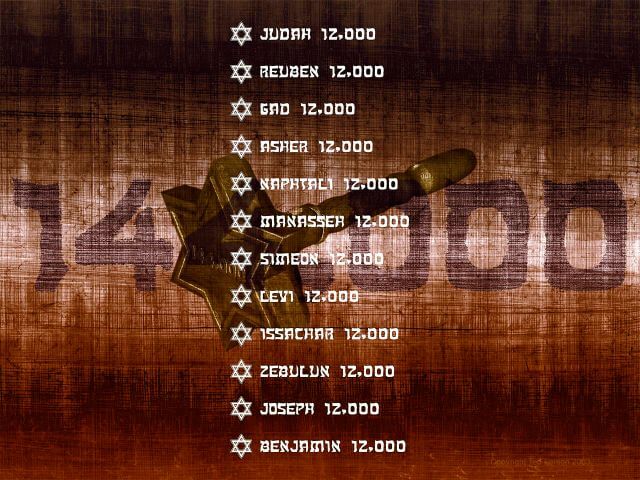
Jesus referred to a little flock of disciples as those who will be given the kingdom. This is in contrast to another group, variously called the other sheep and the great crowd. The little flock will ultimately be composed of 144,000. These are called the chosen ones. They are spoken of as receiving the first resurrection. Revelation explains that those who receive the first resurrection are not vulnerable to the second death. That is because those brought to life in the first resurrection are resurrected as spirits – immortal spirits. Obviously, though, if there is a first resurrection there is also a second resurrection. The second resurrection is the earthly resurrection. The billions of mankind who have lived and died will be brought back to earth as humans. They will benefit from the rule of God’s heavenly kingdom. They will have the opportunity of being rehabilitated from the ravages of sin and living forever on the earth in paradise. This is why Jesus promised the evildoer who was executed next to him that he would be with him in paradise.

How will Jesus be with him in paradise? The 21st chapter of Revelation explains: “Look! The tent of God is with mankind, and he will reside with them, and they will be his peoples. And God himself will be with them. And he will wipe out every tear from their eyes, and death will be no more, neither will mourning nor outcry nor pain be anymore. The former things have passed away.”

Notice that the verse states that God will be with mankind, just as he was originally with Adam and Eve in the Garden. Those who will survive the great tribulation will no doubt be traumatized. They will need comfort. The tribulation and the world-ending war of Armageddon will be a horrific ordeal for them. But that is why God will wipe out every tear from their eyes.

When Lazarus died Jesus took that sad occasion to explain his role as the facilitator of the resurrection and life-giver. Jesus explained to Lazarus’ grieving sister: “I am the resurrection and the life. He that exercises faith in me, even though he dies, will come to life; and everyone that is living and exercises faith in me will never die at all. Do you believe this?” – John 11:25-26

What did Jesus mean “everyone that is living and exercises faith in me will never die at all”? Paul used a similar expression when he said regarding the first resurrection: “Those who are dead in union with Christ will rise first. Afterward we the living who are surviving will, together with them, be caught away in clouds to meet the Lord in the air…”

Paul was referring to himself as among the living that will be on hand when Christ’s presence commences. He said that because he was then living. He was not saying, however, that the living who will join Christ will not die. In the 15th chapter of Corinthians Paul explained the heavenly resurrection to the doubters by comparing it to a seed that must die in order to give birth to the plant that springs from it. Paul wrote: “What you sow is not made alive unless first it dies; and as for what you sow, you sow, not the body that will develop, but a bare grain, it may be, of wheat or any one of the rest; but God gives it a body just as it has pleased him, and to each of the seeds its own body.”

All of the 144,000 chosen ones must die in order to become born as spirits. It is just that those who die during Jesus’ presence do not sleep in death as those who die prior to his coming. Instead of sleeping in the grave they are instantaneously transformed, “in the twinkling of an eye.”

So, those who are living that put faith in Christ must also be those living at the time of his coming. But, since the chosen ones must die to be changed, the living who “will never die at all,” cannot be those who have been called to heaven. The “living,” about whom Jesus spoke to Martha, must be the great crowd that will survive the tribulation.

For a certainty, Jehovah’s Witnesses have the sure hope that they will be the first people who have ever lived on this earth who will never die. What a joyous privilege has been given to Jehovah’s Witnesses on the eve of the great storm that is about to sweep this wicked world away - the prospect of survival and being the first humans since Adam and Eve to enjoy paradise. 

Life, Death and Beyond

The truth is simple. The sad fact is, though, most people prefer to believe lies. And consequently, the truth is an alien thing to them. No doubt the primary reason most people embrace the prevalent lies common to the world is due to the evil influence of the one whom Jesus described as both the ruler of the world and the father of the lie – Satan.

One of the most pervasive lies among both religious and non-religious persons alike is the belief that humans have a soul that lives on after death. If any religious belief could be considered universal it is the belief in an immortal soul. The belief in an immortal soul is as ancient as it is widespread. Ironically, the most ancient and authoritative book on such matters of belief – the Holy Bible – does not teach it. That is why Jehovah’s Witnesses do not believe in the immortality of the soul.

The simple truth contained in the ancient Scriptures is that man is mortal and death brings about a complete loss of consciousness. That is why the Bible speaks of those asleep in death. Death is likened to sleep because when a person is deep asleep they are not conscious. Death is the opposite of life. There is no support in the Bible for the popular belief in an undying soul.

The truth revealed in the Bible is very simple: God originally made man out of the dust of the earth and animated him with the spark of life. The Scriptures word it this way: “And Jehovah God formed man of the dust of the ground, and breathed into his nostrils the breath of life; and man became a living soul.” – Genesis 2:7 (American Standard Version)

However, most modern translations do not translate Genesis 2:7 to say, “Man became a living soul,” for obvious reasons. Instead, they use expressions like: “and the man became a living being.” (NIV) But the original Hebrew word used there is nephesh, which in other passages is translated as soul. Evidently the translators of popular Bibles like the New International Version prefer not to confuse their readers with inconvenient truths, such as the obvious truth that man is a soul, rather than being endowed with an immortal soul.  

Elsewhere in the Bible, such as the very first chapter in Genesis, animals and even fish are referred to as living souls. (Genesis 1:21) Again, translators of popular versions also inconsistently render those passages without using the word soul, preferring to use the word “creatures” instead and usually without providing so much as a footnote explaining their omission. Obviously, this is done in order to perpetuate the fraud that humans have souls that survive death.

But according to the way the Hebrew word for soul is used, it is apparent that a soul is any breathing creature. In fact, the Hebrew word nephesh literally means “breather.” And when a breather stops breathing the soul dies. (“Soul” and “Spirit” – What Do These Terms Really Mean? – Watchtower) That soul is used in connection with animals, the word translated as "animalistic" literally says soulical.

The word soul is also used to describe the life that a person possesses as a living soul. That is why some passages speak of the soul leaving or going out of a person, meaning that they died.

Just as the scripture states that God created man out of the dust, at death man decays into dust. That is what Jehovah told Adam when sentencing him to death due to his disobedience. "In the sweat of your face you will eat bread until you return to the ground, for out of it you were taken. For dust you are and to dust you will return."

THE RESURRECTION FROM THE DEAD

Rather than an immortal soul, the Bible holds out the hope of a resurrection from the dead. The word resurrection is translated from the Greek word anastasis, which literally means to stand up again, in the sense of standing up from a prone position in the grave.

When Jesus was on the earth he resurrected for people back to life. (It is possible that he performed more than four resurrections, but only four are recorded in the Bible.)

On one occasion Jesus and his entourage encountered a funeral procession and a crowd of people coming the opposite way on the road out of the city of Nain. A widow had lost her only son. Jesus stopped the procession and told thee mother to stop weeping. He walked over to the dead man and commanded him to get up and the young man sat up and started speaking. Naturally those who observed this miracle were astonished and fearful.

On another occasion Jesus resurrected his personal friend, a man by the name of Lazarus. In this instance Lazarus had already been buried. But Jesus asked to be taken to the memorial tomb, where he then commanded to have the stone rolled away from the entrance to the tomb. Then with a loud voice Jesus commanded the dead man to come out. And he came out of the tomb wrapped in burial cloth.

No doubt there were many Jews who died during Jesus ministry. He did not resurrect him all. And those whom he did resurrect eventually died again. But the reason Jesus did resurrect the few that he did was in order to demonstrate his power so that we may have faith in the Lord’s promise to resurrect all of the dead when his kingdom comes. Jesus stated at John 5:28-29: “Do not marvel at this, because the hour is coming in which all those in the memorial tombs will hear his voice and come out, those who did good things to a resurrection of life, those who practiced vile things to a resurrection of judgment.”

“All those in the memorial tombs” basically means most people who have ever lived and died. Jehovah’s Witnesses believe that virtually all of mankind will receive the resurrection—an earthly resurrection that is.

The dead will be brought back to life as people and they will be given an opportunity to attain everlasting life in paradise. Even unbelievers and wicked persons will receive a resurrection. That is why Jesus promised the evildoer who was executed next to him that he would be with them in paradise. Paul also said that he had hope in God that there would be a resurrection of both the righteous and the unrighteous.

However, after their resurrection those who were unrighteous in this life will be on probation. That is what Jesus meant by “a resurrection of judgment.” People will be judged by what they do after they are resurrected. If a person continues in their previous ways they will be judged worthy of death and they will die again. This is why the Bible uses the expression “the second death,” because some people will literally die twice. The second death is permanent.

The book of Revelation uses the symbolism of a lake of fire and states that the lake of fire means the second death. Just as fire totally consumes, so it is that the second death symbolizes complete destruction. The Devil will be hurled into the lake of fire, meaning he will be totally annihilated.

Jehovah's Witnesses official website


Is Jesus Michael the Archangel?

The simple truth revealed in the Holy Scriptures, is that Jehovah is God and Jesus is his son. More exactly, Jesus is Jehovah’s only begotten Son, being the only creation in all existence that was directly created by Jehovah himself. But Jesus is not the only son. God is also Father to millions of other sons. Long before the universe was created God had a family of sons in heaven. All the angels are sons of God, created by God by means his firstborn Son.

But the angelic sons of God are not all the same sort. God created one sort as cherubs. Another classification of the spirits is seraphim.  And then there is the chief angel, an Archangel known as Michael, the great prince.

As has already been established, God’s name was originally represented in Hebrew by the Tetragrammaton – the YHWH – represented in English by the name Jehovah. But before God sent his Firstborn son to the earth his name was not Jesus. Jesus was the name given to him at birth by Joseph and Mary. Besides, the name Jesus is derived from the Hebrew name Joshua which means “Jehovah is salvation.” It is unlikely that a spirit would have been named a name that extols salvation from Jehovah long before the earth was even created or before Adam and Eve caused their offspring to be in need of salvation from God in the first place.

The Scriptures inform us that God has a specific name for all of the countless stars in the heavens. And of course, in the human experience everyone has a name too. It is usually the first thing a newborn baby is given. So what was Jesus’ name before he came to the Earth? Reasoning upon the Scriptures it becomes evident that the chief angel, Michael, is the one referred to by the apostle Paul, who emptied himself of his divine form and became the man, Jesus. This is what the Watchtower Society has long recognized and it is what Jehovah’s Witnesses believe and teach.

But some may object saying that nowhere in the Bible does it say that Jesus is Michael. And that is true. But it must be realized that the identity of the Messiah was a closely guarded secret. Although God originally foretold that he would produce the Savior for mankind immediately after Adam and Eve brought sin and death upon themselves and their unborn offspring, the sacred secret was not fully revealed until the earthly coming of Jesus.

JESUS’ PRE-HUMAN EXISTENCE

Some people who ought to know better have foolishly asserted that Jesus had no pre-human existence. But while on Earth Jesus himself revealed in unmistakable terms that he indeed had a pre-human existence alongside God. For example, Jesus once told the Jewish Pharisee, Nicodemus, that no one had ascended into heaven except he that had descended, the Son of man. In this, Jesus was speaking of his future resurrection and ascension back to heaven and declared that no human had preceded him to heaven and he also, obviously, declared himself to have descended from heaven. 

Jesus also compared himself to the manna from heaven that God had miraculously provided the Jews in the Wilderness, saying to the Jews: “Most truly I say to you, Moses did not give you the bread from heaven, but my Father does give you the true bread from heaven. For the bread of God is the one who comes down from heaven and gives life to the world.”

 On that occasion Jesus went on to say: “I am the bread of life. He that comes to me will not get hungry at all, and he that exercises faith in me will never get thirsty at all. But I have said to you, you have even seen me and yet do not believe. Everything the Father gives me will come to me, and the one that comes to me I will by no means drive away; because I have come down from heaven to do, not my will, but the will of him that sent me.”

 Speaking on another occasion to the unbelieving Jews, Jesus also said: “You are from the realms below; I am from the realms above. You are from this world; I am not from this world.” 

In speaking to the disbelieving disciples, in the 6th chapter of the Gospel of John Jesus, said to them: “Does this stumble you? What, therefore, if you should behold the Son of man ascending to where he was before?”

And lastly, in a prayer recorded in the 17th chapter of John Jesus requested of Jehovah the following: “So now you, Father, glorify me alongside yourself with the glory that I had alongside you before the world was.”

MICHAEL THE ARCHANGEL, THE GREAT PRINCE

Michael the archangel is featured in the Bible as the chief angel; the leader of all of heaven’s angels. He is also revealed to be the leader of God’s people – both before Christ and after. He is portrayed in the Bible as the savior of Christians during the tribulation and the vanquisher of Satan, the serpent. In short, Michael is shown to possess all authority in heaven and on earth – the same as Jesus Christ.

We are first introduced to Michael in the 10th chapter of Daniel, when an unnamed angel appeared to the prophet and explained to him that the prince of Persia had waylaid him for 21 days, saying further to Daniel: “And, look! Michael, one of the foremost princes, came to help me; and I, for my part, remained there beside the kings of Persia.”

Obviously the prince of Persia is not in reference to any human prince. No human, no matter how strong, could possibly resist a powerful angel. The prince of Persia is undoubtedly a demonic prince. Down further in the last verse of the 10th chapter, the angel revealed to Daniel that Michael was “the prince of you people.” Just as the Persians had a demon prince acting under Satan’s authority, Jehovah’s people – even while in captivity in Babylon and then in Persia – had a righteous prince ruling over them, a prince ruling in behalf of Jehovah.

Michael was evidently the angel who represented Jehovah on Mount Sinai when Moses received the Ten Commandments. That is because, although the original account states that Jehovah came down upon the mountain, centuries later the apostolic writings reveal that the Law was actually transmitted through angels. Michael’s leadership of Israel is also evident in what is stated in the letter of Jude: “But when Michael the archangel had a difference with the Devil and was disputing about Moses’ body, he did not dare to bring a judgment against him in abusive terms, but said: ‘May Jehovah rebuke you.’”

The next reference to Michael is at Daniel 12:1:2, which reads: “And during that time Michael will stand up, the great prince who is standing in behalf of the sons of your people. And there will certainly occur a time of distress such as has not been made to occur since there came to be a nation until that time. And during that time your people will escape, every one who is found written down in the book. And there will be many of those asleep in the ground of dust who will wake up, these to indefinitely lasting life and those to reproaches and to indefinitely lasting abhorrence.”

Here Michael is described not merely as “one of the foremost princes,” but as “the great prince.” And again, the angel states that Michael is ruling over God’s people. However, there is a distinction. He is said to rule over the “sons of you people”— not, “you people.” That is because the angel was foretelling the future, whereas in the 10th chapter the angel was relating what was then taking place. But “the sons of you people” is not in reference to the Jews. How to we know? Because Daniel 12:1-2 is foretelling events that will transpire during the time of the end. In fact, the time of distress mentioned by the angel is described in the exact same terms that Jesus later used when foretelling that the chosen ones would be saved out of a great tribulation, such as had never occurred before on earth, nor will ever occur again.

Furthermore, Jehovah’s Witnesses are well aware of the fact that the real sons of Abraham, “the sons of you people,” are not natural born Jews. They are Christians with the faith of Abraham, whom Paul stated was the father of all those who have faith. So, while Michael formerly was the heavenly leader of the Jewish nation, the Scriptures reveal that Michael is also the leader of Jehovah’s people at the outbreak of the great tribulation. His standing in their behalf can mean nothing else but that the great prince will assert his power and authority as the ruler and protector of Christians.

Of course, true Christians do not acknowledge any heavenly prince or lord as their leader except the Lord, Jesus Christ.

Not coincidently, though, the Messiah is also declared to be the “Prince of princes” – similar to Michael’s designation as "one of the foremost princes" and "the great prince."

Students of Daniel’s prophecy ought to take note of the overall theme of the book – that being, the advent of the kingdom of God. In the seventh chapter of Daniel the kingdom is given to the Son of man, who then slays the beastly kingdom. “Son of man” is the title given to Christ. In the eighth chapter the kingdom is given to the “Prince of the army” and the “Prince of princes,” who breaks the audacious king fierce in countenance. And in the 12th chapter of Daniel Michael, the great prince, stands up with ruling authority and conquers the king of the north.

In this, though, the Watchtower seems to have gotten lost. They teach that the Prince of princes is Jehovah God himself. But that violates the obvious theme of Daniel and it is disharmonious with other related titles Jesus bears. For example, elsewhere in the Scriptures Jesus is called the Lord of lords and the King of kings. Prince of princes is in harmony with those titles – a prince being the son of a king and often the heir apparent. The apostle Paul explained how Jesus is God’s heir and that he inherited the throne of his Father. (Please note that Jesus does not possess the title of “God of Gods.” That title is reserved exclusively for Jehovah God. Instead, Jesus is one of the gods over whom Jehovah is God.)

One common objection Trinitarians often put forward is that Michael could not be Jesus because of what is stated in the letter to the Hebrews, which says: “For example, to which one of the angels did he ever say: ‘You are my son; I, today, I have become your father’? And again: ‘I myself shall become his father, and he himself will become my son’? But when he again brings his Firstborn into the inhabited earth, he says: ‘And let all God’s angels do obeisance to him.’”

Their reasoning is: Since God did not declare any of the angels to be his special son, and Michael the archangel is obviously an angel, then Jesus could not be Michael.

This reasoning is badly flawed and reflects an ignorance of the most basic truths of the Bible; namely, that when Jehovah declared Jesus to be his son it was on the occasion of his being baptized in the Jordan River by John the Baptizer. That is when Jesus was anointed by holy spirit and born again. And being an ancestor of the Hebrew linage of kings stemming from David, Jesus also inherited the legal right to become the king of Israel. So, the answer to Paul’s question, to which one of the angels did God ever say, “You are my son”? The answer is none. Jehovah did not say that to any angel. He said it to a man. Jehovah said it to Jesus.

When Jesus was on earth he did not simultaneously live in heaven. Paul explained to the Philippians that Christ forsook his heavenly nature and emptied himself and became a man. After his resurrection and ascension back to heaven Jesus was exalted and given all authority over God’s angels. The apostle Peter explained: “He is at God’s right hand, for he went his way to heaven; and angels and authorities and powers were made subject to him.”

Angels were not always subject to Jesus. They became such after his ascension. This gives rise to the question: How many commanders do the angels have? The question is asked in view of the fact that the 12th chapter of Revelation refers to Michael and his angels doing battle with the Devil and his angels. And since Jesus is the seed of the woman foretold in prophecy to be the one who will bruise the head of the serpent, why is Jesus absent from the vision of Revelation that portrays the beginning of the war against the serpent and his seed. Has Michael usurped Jesus as the ruler of the angels? Obviously not.

Another objection occasionally encountered from the Jesus-is-God crowd, is that Jesus could not be Michael because, as cited already, Michael did not have authority to rebuke Satan when a dispute arose over the disposition of Moses’ corpse – whereas, Jesus does have authority to rebuke the Devil. Obviously, though, Michael will have authority over Satan when the battle of heaven is fought. This reflects the fact that prior to his coming to the earth Jesus did not have all authority. That is why also, during the days of Daniel, Michael was simply one of the foremost princes. But after Christ triumphantly returned to heaven, victorious over the ruler of the world who tempted him in every way, now Michael is the great prince, commanding all of God’s angels and having full authority to banish Satan from the heavenly realm and crush him.

Also Revelation 20:1-2 reveals that an angel from heaven will ultimately bind Satan and hurl him into the abyss. It is inconceivable that anyone other than Christ will cast Satan down and lock him up and ultimately destroy him, since Satan was personally responsible for Christ’s suffering and death. The crushing of Satan is not something that Jesus would delegate to any angel.

Finally, just as Daniel 12:1-2 places the awakening of those asleep in the dust of the ground in the immediate context of Michael standing up, so too, Paul relates at 1 Thessalonians 4:15-16 that Jesus will possess the commanding voice of an archangel when he wakes the dead.

A careful examination of the Scriptures reveals that Michael is depicted as doing all the things of which it is Jesus sole prerogative to do and that the great archangel possess all the authority of Christ himself. That being the case, it should be apparent to honest-reasoning students of the Bible that Jesus Christ, the Prince of princes, and Michael the archangel, the great prince, are, indeed, one and the same.

'Jehovah's Witnesses deny the Deity of Christ'

A common accusation by Trinitarians is that Jehovah’s Witnesses deny the deity of Christ. That certainly sounds sinister. Denying the divinity of Jesus makes Jehovah’s Witnesses out to be unchristian, even anti-Christs. But such is not the case. In truth, Jehovah’s Witnesses do not deny the divinity of Christ. As already stated above, Jehovah’s Witnesses believe Jesus had a prehuman existence and in that state he was divine. Although not Almighty God, the Word, as he was/is called, was a god. He existed as the very image and likeness of the only true God.

However, upon his becoming human Jesus left off his heavenly nature. Paul explained it this way at Philippians 2:5-11: “Keep this mental attitude in you that was also in Christ Jesus, who, although he was existing in God’s form, gave no consideration to a seizure, namely, that he should be equal to God. No, but he emptied himself and took a slave’s form and came to be in the likeness of men. More than that, when he found himself in fashion as a man, he humbled himself and became obedient as far as death, yes, death on a torture stake. For this very reason also God exalted him to a superior position and kindly gave him the name that is above every [other] name, so that in the name of Jesus every knee should bend of those in heaven and those on earth and those under the ground, and every tongue should openly acknowledge that Jesus Christ is Lord to the glory of God the Father.”

Some translations, like the King James Version, mutilate Philippians 2:5 to read: “Let this mind be in you, which was also in Christ Jesus: Who, being in the form of God, thought it not robbery to be equal with God…”

 If that rendering were true, though, it would seem that Paul was exhorting Christians to presumptuously seek equality with God – after all, that is what they have Christ doing by such shoddy translating.

In reality, the apostle is telling Christians to follow Jesus’ sterling example of humility, because even though Jesus originally existed in God’s form, as the verse clearly states, Christ Jesus did not consider himself God’s equal. (It is no wonder many Trinitarians prefer the King James Version.) Instead of grasping for equality with God Jesus emptied himself. The question is: Of what did Jesus empty himself? The answer: Jesus divested himself of his divinity. He was in God’s form – a deity, to be sure. He forsook his divine nature and “took a slave’s form and came to be in the likeness of men.” And as a man Jesus submitted himself to a tortuous death. For that reason God exalted his son to his very throne.

But while Jesus was on the earth he was not a deity. He was a man. Jesus was not part God and part man. He was not a god-man or demigod. In the 15th chapter of 1st Corinthians Paul explained that Jesus corresponded in value to the original human God had created. Quoting Genesis in the first part of the passage below, the apostle wrote: ‘“The first man Adam became a living soul.’ The last Adam became a life-giving spirit. Nevertheless, the first is, not that which is spiritual, but that which is physical, afterward that which is spiritual. The first man is out of the earth and made of dust; the second man is out of heaven. As the one made of dust is, so those made of dust are also; and as the heavenly one is, so those who are heavenly are also. And just as we have borne the image of the one made of dust, we shall bear also the image of the heavenly one.”

Jesus is called “the second man” because he is only the second perfect man whom God has created. Similarly, Jesus is called the “last Adam” because he was the last human that God will ever produce. But the point is, Jesus was human, just as Adam was human. This is why Jesus’ death is called “a corresponding ransom for all.” The value of Jesus’ perfect human life corresponds to what the first man originally possessed before he became a sinner against God. Had Jesus been a god-man or a human deity of some sort he would not have had a corresponding value to the original man.

In actuality, those who accuse Jehovah’s Witnesses of denying the deity of Jesus, themselves, deny the vital ransom Christ provided. They do so by denying that Jesus was solely human. By making him God incarnate they disqualify Jesus from being the equivelant of Adam. Trinatarians unwittingly deny the great act of humility Jesus performed too, when he willing left behind his divine nature and became a lowly human.

Trinitarians also unwittingly deny the love of God as well, because had Jesus been Jehovah, as the popular myth would have it, then it renders meaningless the fact that God rewarded Jesus for his great humility and sacrifice. Or, are we to believe that Jehovah rewards himself for being loyal to himself and he gives himself gifts and honors that he has always possessed? Although enwrapped in high-sounding theological language and endorsed from the highest pulpits, to believe that Jesus is God himself is to embrace the absurd.


Jesus Christ - The Only-Begotten Son of God

Jehovah God and Jesus Christ have a very special bond – even a unique relationship. Long before he was born to the Jewish virgin, Mary, Jesus had been born as a spirit and Jehovah was his Father. 

Although it is humanly incomprehensible the Almighty, Jehovah, was alone for an eternity. But when God became a Creator his very first creation was the spirit creature that eventually became the man, Jesus Christ. That is why Jesus is called “the firstborn of all creation” and “the beginning of the creation by God.” (Colossians 1:15 and Revelation 3:14) 

God made the first spirit in his exact likeness and representation. (Hebrews 1:3) As a demonstration of his great love and unselfishness Jehovah God then willed that his firstborn son should share in the joy of the creation of all else. So it is, that, the Scriptures reveal that it was by means of his firstborn son Jehovah created all other things in the heavens and on earth. That is why we read in Genesis concerning the creation of Adam and Eve that God spoke to an unnamed entity saying: ‘Let us make man in our image and our likeness.’ 

God's firstborn son has the unique privilege of being the only creature that God directly created. All other creation including the mighty angels, were created through Jesus, or through the Word, as he was titled in his prehuman existence. This is why Jesus referred to himself as the only-begotten Son of God. He was the only son that Jehovah fathered directly. All other sons were begotten through the agency of the firstborn. 

(In the Bible the word that is translated as “only-begotten” (monogenes) was also used in connection with earthly children to mean that they were the only child of a parent, being without siblings. In the case of Jesus, only-begotton similarly means that he is a one-of-a-kind and has a unique relationship with Jehovah.)

Because of his close relationship with his Father, Jesus knows Jehovah as no one else does. That is why Jesus said no one knows the Father but the Son. It is Jesus’ purpose to reveal and explain the Father to those who are so favored. 

IS JESUS GOD?

From the beginning of the Watchtower Society the Bible Students rejected the popular belief that God is a Trinity. The fact is, the persistent and pervasive belief that Jesus Christ is/was God is one of the biggest hoaxes ever perpetrated in the name of religion. Jehovah’s Witnesses reject the Trinity as a pagan belief that has been transplanted into what is now passed off as an essential article of Christian faith. The notion that God and Jesus and the holy spirit comprise a three-in-one Trinity is nowhere to be found in the Bible. Nor did Jesus himself ever claim that he was God. On the contrary, Jesus always referred to himself as the Son and his Father as God.

Over the centuries ardent Trinitarian believers have scoured the Scriptures to try to stitch together support for the mythological Trinity. Worse, Bible translators have skewed the translation of various scriptures so as to lend support to the Trinity.

A classic example of such biased Bible translation is the rendering of John 1:1. For the unfamiliar, most translations of that verse say: “In the beginning was the Word, and the Word was with God, and the Word was God.”

The original Greek did not have the equivalent of an indefinite article (a and an). So in order to distinguish between the specific and non-specific the Greek uses the definite article (the). At John 1:1 there are two entities. The Word and God. To distinguish them the Greek literally says that ‘the Word was with the God and the Word was God.’ Of course, the verse is not translated using “the” before the first God. That is not how English sentence structure works. To properly translate that verse into English the indefinite article ought to be used in connection with the Word. Trinitarian translators do this with other verses but refuse to do so at John 1:1. For example, Acts 28:6, which reads: “The people expected him to swell up or suddenly fall dead, but after waiting a long time and seeing nothing unusual happen to him, they changed their minds and said he was a god.” (NIV) Like John 1:1, Acts 28:6 does not contain the indefinite article. It states that the people said he was God. The translators realize, though, that the superstitious Maltese people imagined Paul was one of the pantheon of Greek gods. And so they insert the indefinite article to reflect the true meaning of the Greek. The same should be done with John 1:1, as it is obvious that the context warrants such.

Reasoning on John 1:1, the Word is said to be with God “in the beginning.” But God had no beginning. If the Word is co-eternal than it would be inappropriate to speak of a beginning. The Word was the beginning of God’s creation. Hence, that is why he was with God in the beginning.

The Trinity doctrine and the equally nonsensical Oneness doctrine peculiar to Pentecostalism, turn the meanings of words and basic concepts upside down. As an example, throughout the Scriptures Jesus is portrayed as the Son of God. He always referred to Jehovah as both his God and Father. In areas outside of trinitarian theology it is recognized that the father/son relationship means that the father gives birth to and precedes his own son. Not so in trinitarian and Oneness theology. Theology has effectively rendered the father/son relationship meaningless. Jesus had no beginning, according to Trinity believers. Why Jesus referred to himself as a son and God as a Father is anyone's guess because it bears no resemblance to the father/son relationship common in the human sphere. It would seem that God deliberately wants to confuse people. 

Other aspects of the Trinity are equally absurd. Take the fact that Jesus prayed to God, even supplicating him for strength and assistance. In fact, the apostle Paul stated that Jesus implored God with strong outcries and tears and he was favorably heard for his godly fear. Are we to assume that Jesus feared himself; that he prayed to and worshiped himself? The Scriptures reveal that Jesus obeyed God. On the night of Jesus' arrest he implored God to take this cup away from him, 'but not as  I will, but as you will.' In other words, Jesus submitted himself to the will of Jehovah and did not act upon his own wish. Furthermore, at John 14:31 Jesus stated the following: "I shall not speak much with you anymore, for the ruler of the world is coming. And he has no hold on me, but, in order for the world to know that I love the Father, even as the Father has given me commandment to do, so I am doing." According to Jesus it is Jehovah's will that the world come to know that Jesus loves him and, as Jesus stated, God had, in fact, commanded him to do so. But if God were three in one, as is commonly believed, that would mean that God commanded himself to love himself. These are just a few of many, many absurdities that people unwittingly embrace when they accept the the Trinity. 

Jesus repeatedly stated that what he spoke and taught was not his own teaching but came from his Father. Even more to the point, Jesus said that he did nothing of his own initiative, but only what his Father taught him. But there are even more absurdities inherent in the notion that Jesus was/is God. Consider the fact that God gives his throne to Jesus and that Jesus rules in behalf of Jehovah but after 1,000 years Jesus turns the kingdom back over to God and Jesus submits himself to God. So, the Trinity doctrine would have us believe that God gives himself his own throne but then gives it back to himself. How ridiculous!

Any rationale person who reads the Gospels who is unindoctrinated would never come to the conclusion that Jesus was part of some mysterious three-persons-in-one-God or one God with three manifestations, as in Oneness. Jehovah's Witnesses teach the truth as regards the nature of Jesus and the relationship Christ has with Jehovah God. 

Jehovah - The Only True God

"But Jehovah is in truth God. He is the living God and the King to time indefinite. Because of his indignation the earth will rock, and no nations will hold up under his denunciation. This is what you men will say to them: 'The gods that did not make the very heavens and the earth are the ones who will perish from the earth and from under these heavens.' He is the Maker of the earth by his power, the One firmly establishing the productive land by his wisdom, and the One who by his understanding stretched out the heavens." - Jeremiah 10

 Jehovah’s Witnesses, as the name implies, believe that Jehovah is the only true God. 

On the last night of his life as a man Jehovah's foremost witness, Jesus Christ, expressed this truth in prayer to his heavenly father, saying to him: “This means everlasting life, their taking in knowledge of you, the only true God, and of the one whom you sent forth, Jesus Christ.” 

According to Jesus God is a Spirit. (John 4:24 NIV) His place of dwelling is in another dimension, which Jesus referred to as the realms above earth, also known as heaven. 

As the original Deity, Jehovah created all things, including Jesus Christ. Hence, Jehovah is the Creator. (The unique relationship between Jehovah and Jesus will be discussed in greater detail.) Being the only person in existence who did not have a beginning, Jehovah is called the King of eternity or King of the ages. (1 Timothy 1:17 Young's Literal Translation)

Having no limitations and no peer, Jehovah God is Almighty. 

Jehovah is a person, a spirit person. Being a person means that God is an individual. God stated at Deuteronomy 6:4: "Listen, O Israel: Jehovah our God is one Jehovah." Being "one Jehovah" means that God is not three persons in one, as is commonly believed by trinitarians. Being a person, God has a personality. Besides being all-powerful, eternal and the source of all knowledge and wisdom, God's dominate personality trait is love. Jehovah is the very personification of love. He is said to be abundant in mercy and loving kindness. Jehovah is also a lover of justice. God's personality is reflected in humanity. That is because God originally created man in his image. Although, due to fallen human nature God's image is not reflected in humanity as God intended, still, the fact that mankind possess and values such qualities as love, kindness, mercy and justice testifies to God's character. 

Jehovah's Witnesses believe that it is God's purpose to rehabilitate mankind, so as to uplift humanity out of its sinful dying condition.


The God who sponsored the writing of the Bible has a distinctive personal name. In Hebrew, the language in which the so-called Old Testament was primarily, originally written, the personal name of God was written using for Hebrew consonants that correspond to YHWH. The four Hebrew letters are known as the Tetragrammaton. The Tetragrammaton may be thought of as a sort of abbreviation. The reader of Hebrew was expected to know which vowel sounds were to be used with each consonant to form syllables. Through disuse it cannot be definitively determined which vowels were used. Hence, the correct pronunciation is uncertain. That being said, although some scholars prefer Yahweh, the name Jehovah is in keeping with the English pronunciation of other Hebrew names. For that matter, there are dozens of renderings of YHWH in various languages, Latin-based languages and otherwise, that use similar spelling as the English.

The importance of knowing and honoring God's name cannot be understated. According the the ancient prophecy of Joel, during the cataclysmic end of the present system everyone who calls upon the name of Jehovah will be saved. (Joel 2:32 - American Standard Version)

It is also God's intention to have his name declared in all the earth. In this Jehovah's Witnesses have been instrumental. The Watchtower Society has published the name of God and his purpose in 400 languages.  But that is merely preliminary. Jehovah will ultimately force the peoples of the world to recognize his name and supremacy. “Therefore here I am causing them to know; at this one time I shall cause them to know my hand and my mightiness, and they will have to know that my name is Jehovah.” - Jeremiah 16:21