Part six
On his final trip to Jerusalem, Jesus was confronted by the Pharisees, and they asked him when the Kingdom of God was coming. The Lord answered them, saying: “The Kingdom of God is not coming with striking observableness; nor will people say, ‘See here!’ or, ‘There!’ For look! the Kingdom of God is in your midst.” – Luke 17:20,21
Jesus had just cured 10 lepers of their loathsome disease. It is quite likely that some of the Pharisees witnessed this miracle. By this and many other wonders, Jesus gave convincing proof that he was the Christ, the one whose right it was to the vacated throne of David. And yet, when Jesus entered the holy city riding on a lowly beast of burden, hailed as king by the humble people, a short time later, the king of God’s Kingdom who was in their midst was arrested and executed.
To dispel the error affixed in many people’s minds due to the misunderstanding caused by some translations, Jesus did not mean that the Kingdom of God was within each believer. This can be easily proven given the fact that most of the sect of the Pharisees were hardened opposers of Christ. Which is why on another occasion Jesus castigated the Jewish religious leaders, saying to them: “Woe to you, scribes and Pharisees, hypocrites! because you shut up the Kingdom of the heavens before men; for you yourselves do not go in, neither do you permit those on their way in to go in.” – Matthew 23:13
What then did Jesus mean by “the Kingdom of God is in your midst”? The simple answer is that as the designated king of God’s Kingdom, Jesus was at that time among the people as a teacher sent by God. Although anointed as the messianic king, he commanded no army, as great kings do. He wasn’t attended to by a body of servants. He had no queenly consort. He did not sit on a throne in a grand palace. In fact, he once said the Son of man has no place to lay his head. Thus, the future king walked among them, largely unrecognized. But there is much more to Jesus’ answer than that.
Turning to his disciples, Jesus went on to expand upon his brief reply to the Pharisees, saying to them: “Days will come when you will desire to see one of the days of the Son of man, but you will not see it. And people will say to you, ‘See there!’ or, ‘See here!’ Do not go out or chase after them. For just as lightning flashes from one part of heaven to another part of heaven, so the Son of man will be in his day.” – Luke 17:22-24
Clearly, Jesus was speaking about his return and ultimate parousia. We know this to be true since a short time later, while sitting with his disciples on the Mount of Olives, Jesus reiterated and expanded upon his illustrations recorded in the 17th chapter of Luke regarding the conclusion of the system, including the comparison of his presence to lightning that lights up the sky from east to west.
There is one notable difference, though. In his Mount of Olives discourse, Jesus spoke of the presence of the Son of man, comparing it to the day Noah entered into the ark and the wicked were swept away; but on the occasion when he enlarged upon his response to the Pharisees, he said: “It will be the same on that day when the Son of man is revealed.” This means that the presence of the Son of man is also the revealing of the Son of man.
This presents yet another contradiction for Jehovah’s Witnesses, though I am certain that they do not realize it. Even so, it should be evident to clear-headed readers that the parousia and the revealing are equivalent and interchangeable terms. That being true, imagine if the Watchtower, instead of speaking of an invisible presence, used a comparable phrase such as the “invisible revealing.” It jars the mind.
Since Christ did not begin ruling in the first century, it is evident that the Kingdom will not come with striking observableness when it does come. That is why Jesus warned his followers who would be living then not to respond to reports that the Christ is here or there at some physical location.
In what sense will the Kingdom be in our midst? That is an important question since Jesus said wherever two or more are gathered in his name, he is in their midst. Since Christ is in the midst of believers before the Kingdom comes, what about when it comes?
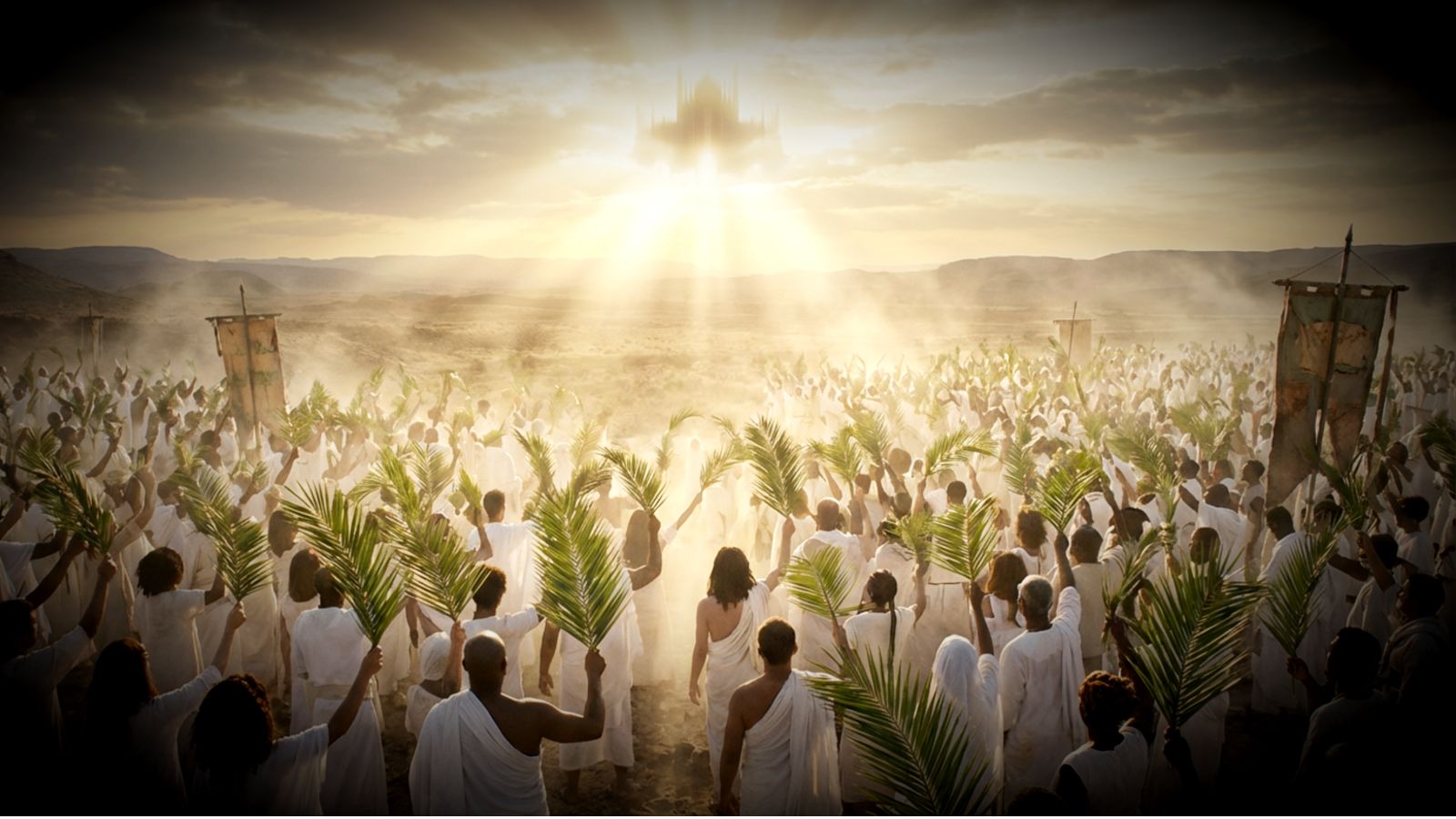
We have already established that Christ’s being with his disciples all the days until the conclusion will be superseded when he comes alongside them; surely the revealing of the Son of man will be in relation to the chosen. At that point, the chosen will be sealed and granted entry into the Kingdom. That is why, in his illustration of the wheat and the weeds, Jesus said the righteous will shine as brightly as the sun in the Kingdom of their Father. Then, as the apostle stated, “when he is made manifest we will be like him, because we will see him just as he is.” – 1 John 3:2
Jesus once said that nothing carefully concealed will not be revealed. This principle also applies to those who have been hidden in Christ. That is why Paul stated the following: “For you died, and your life has been hidden with the Christ in union with God. When the Christ, our life, is made manifest, then you also will be made manifest with him in glory.” – Colossians 3:2,3
In case the point has not been clear enough, the parousia, manifestation, and the revelation of Christ are the same thing. And since Christ will only come alongside, reveal, and manifest himself to those who have died and been hidden in union with him, the manifestation of the chosen results in their being revealed. That was why Paul informed the Romans: “For I consider that the sufferings of the present time do not amount to anything in comparison with the glory that is going to be revealed in us. For the creation is waiting with eager expectation for the revealing of the sons of God.” – Romans 8:18-19
How shall the sons of God be revealed?
ALL OF US REFLECT THE GLORY OF JEHOVAH
In his first letter to the Corinthians, Paul likened Christianity to looking at one’s reflection in a hazy metal mirror. However, in his second letter to them, he wrote the following: “Now Jehovah is the Spirit, and where the spirit of Jehovah is, there is freedom. And all of us, while we with  unveiled faces reflect like mirrors the glory of Jehovah, are transformed into the same image from one degree of glory to another, exactly as it is done by Jehovah the Spirit.” (3:17-18)
The apostle recalled the time when Moses wore a veil because the Israelites were terrified by his radiant appearance from his meeting with Jehovah face-to-face on the mountain. Moses’ face reflected the glory of Jehovah—a glory that Paul said would be done away with, as the covenant Moses mediated between God and the Israelite nation had already become obsolete.
We should not imagine, though, that anointed Christians in the first century literally radiated Jehovah’s glory as did Moses. Paul contrasted the old covenant, which administered death and was written in stone, with the new covenant, highlighting that the latter is far more glorious. Was Paul using hyperbole when he said, “We with unveiled faces reflect like mirrors the glory of Jehovah”? No. He was speaking to the future when the new covenant will be fulfilled. How do we know? Because Paul contrasted looking at a hazy image in a metal mirror to seeing him face-to-face. The apostle also illustrated it by likening the change from a child to an adult. Christianity will reach full manhood when Christ comes and completes his work.
The new covenant is only mentioned once in the Hebrew texts, in Jeremiah, where we read: “Look! The days are coming,” declares Jehovah, “when I will make with the house of Israel and with the house of Judah a new covenant. It will not be like the covenant that I made with their forefathers on the day I took hold of their hand to lead them out of the land of Egypt, ‘my covenant that they broke, although I was their true master,’ declares Jehovah. For this is the covenant that I will make with the house of Israel after those days,” declares Jehovah. “I will put my law within them, and in their heart I will write it. And I will become their God, and they will become my people. And they will no longer teach each one his neighbor and each one his brother, saying, ‘Know Jehovah!’ for they will all know me, from the least to the greatest of them,” declares Jehovah. “For I will forgive their error, and I will no longer remember their sin.” – Jeremiah 31:31-34
In the context of Paul saying we reflect like mirrors the glory of Jehovah, the apostle also said we are ministers of the new covenant. Christians are still ministers of the new covenant because Christ has not come. This should be evident from Jehovah’s statement that the new covenant will bring about a state of complete enlightenment, whereby no one will need to be taught about Jehovah. That can hardly be the condition of Christian’s now. Isn’t the Watchtower all about teaching people, anointed included, to know and love Jehovah? Therefore, the administration of the new covenant will not be completed until he comes. That is when the separation will remove the faithless and wicked, and God will implant His law within the true sons of the Kingdom. Having God’s law written on one’s heart means they can never be disloyal to their God. That is when the chosen will shine as brightly as the sun, with unveiled faces, reflecting like mirrors the glory of their heavenly Father and Savior.
“HIS FACE WAS LIKE AN ANGEL’S FACE”
Stephen was one of the original Christians. The account says he was full of divine favor and power and performed great wonders and signs. A group of Jews began disputing with him, but they could not hold their own. So, they persuaded men to falsely accuse Stephen of promoting a rebellion against Moses, and he was hauled before the Sanhedrin—the same judicial body that had condemned Christ to death. What happened next, Acts 6:15 says: “And as all those sitting in the Sanhedrin stared at him, they saw that his face was like an angel’s face.”
 In his lengthy defense, Stephen recounted the history of Israel and concluded by condemning the Sanhedrin and the Jews for having murdered the righteous one. As they began to gnash their teeth in rage, Stephen looked up and announced that he was looking at God and Jesus standing at his right side. In other words, Stephen saw Jesus in his glory and spoke to him. At that point, the enraged Jews stoned Stephen to death.
In this, we have a portent of momentous events to come. Jesus foretold that during the conclusion, “people will lay their hands on you and persecute you, handing you over to the synagogues and prisons. You will be brought before kings and governors for the sake of my name. It will result in your giving a witness. Therefore, resolve in your hearts not to rehearse beforehand how to make your defense, for I will give you words and wisdom that all your opposers together will not be able to resist or dispute. Moreover, you will be handed over even by parents and brothers and relatives and friends, and they will put some of you to death, and you will be hated by all people because of my name.” – Luke 21:12-17
Stephen demonstrated how opposers are not able to resist or dispute one who is filled with God’s spirit. Stephen was also handed over and made to stand before the rulers to give them a witness. He was surely hated because of Jesus’ name. And he was put to death, as Jesus said some of us will be. Moreover, Stephen saw a vision of Christ, and it was as a result of his giving witness to what he had seen that the Jews were provoked into murderous madness.
What does an angel’s face look like? We do not know. It was a supernatural manifestation. It should be noted that there is no record that James’ face became like an angel’s face when he was martyred, nor any other first-century Christian who was killed on account of the name of Jesus. The portentous account of Stephen is a preview of what will occur when the sons of God are revealed.
Do all people hate Jehovah’s Witnesses because of Jesus’ name? Not really. Jehovah’s Witnesses are more hated because of their association with the name of Jehovah, not Jesus. In fact, a legitimate criticism of the Watchtower is that it downplays the role of Jesus. Everything is about Jehovah.
It is understandable if the name Jehovah has been overemphasized, given that Christendom has all but erased the divine name and replaced it with Jesus. Still, in recent years, it seems Jesus has been pushed further and further into the background. This is all the more contradictory since Paul stated that when God again brings his Firstborn into the world, he will command his angels to worship him. If Christ returned in 1914 as the Watchtower claims, why don’t Jehovah’s Witnesses worship him or at least honor him more than they do?
Since the chosen have not been thrown from their congregations and been hauled before local courts, governors, and kings to give them a witness that all of their opposers will not be able to dispute, nor have they been betrayed by brothers or handed over by family members to be put to death, neither have they become hated by all people because of the name of Jesus. Their giving witness that they have seen Christ face-to-face will bring all these things upon them.
End of part six…